Making rice noodles from scratch seems daunting at first but once you get into the flow of steaming the trays containing the rice flour batter, removing it from the pan, placing the second pan in, removing the sheet from the tray, stacking the sheets of whole rice noodle, and doing it all over again, then you’ll have a kilo of fresh rice noodles in a little less than an hour.
This recipe makes 1 kilo of fresh noodles and you can store freshly made noodles in the fridge for up to 3 days until ready to use!

These are really versatile and you can enjoy them in stir-fries, noodle soups, and so many more!

I made these noodles and cooked up Hofan or some stir-fried flat rice noodles, and it reminded me so much of my childhood.
Find the full recipe and steps on how to make your own rice noodles below!
OTHER RECIPES TO TRY USING RICE NOODLES:
Tofu and Mushroom Hofan (Stir-Fried Flat Rice Noodles)

Thai Drunken Noodles (Pad Kee Mao)

You can also check out my other noodle recipes:
- Spicy Miso Noodles
- Mie Goreng (Indonesian Fried Noodles)
- Easy Spicy Miso Noodles
- Thai Drunken Noodles (Pad Kee Mao)
- Chili Garlic and Black Bean Eggplant Noodles
- Easy Sweet, Spicy, and Saucy Noodles
- Stir-Fried Tofu and Basil Noodles
- Tantanmen (Vegan Ramen)
- Yaki Udon
- Hofan (Stir-Fried Flat Rice Noodles)
- Chinese-Style Bolognese
- Ginger and Scallion Noodles
- Chili Garlic Oil Noodles
- Easy Saucy Ramen Noodles
Are you looking for more delicious, vegan recipes?
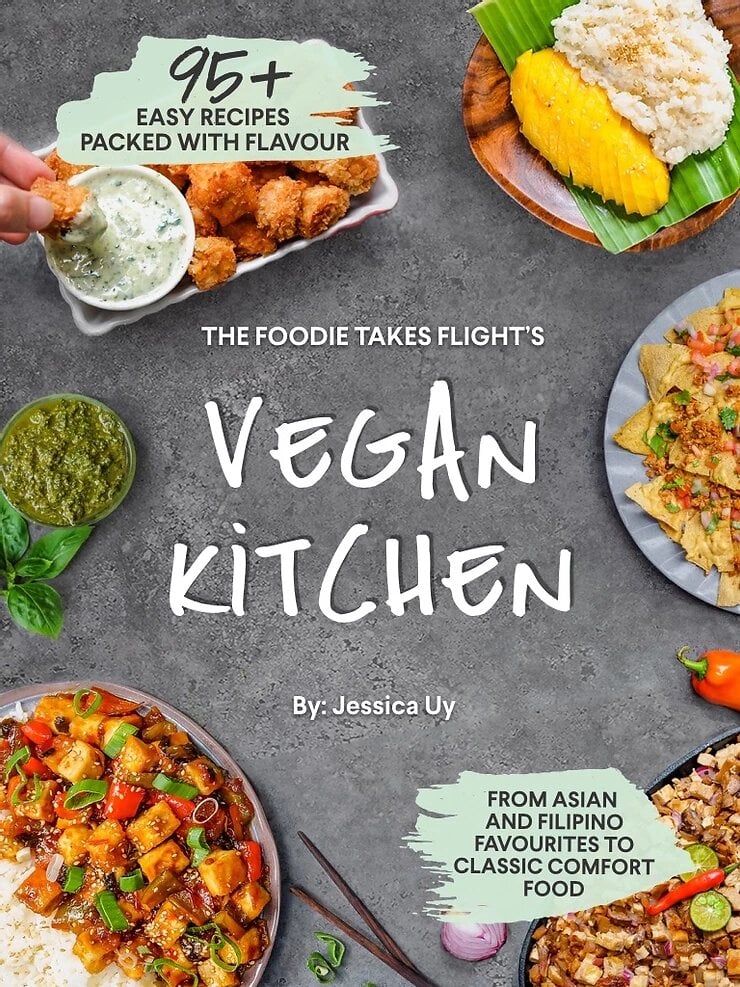
Check out my latest Vegan Kitchen eBook, that has over 95 recipes (and a whole section for Asian recipes!) that are packed with flavour and made with simple and easily accessible ingredients! Also, two trees (instead of 1!) will be planted for every download of my eBook through non-profit organisation One Tree Planted.?


Homemade Fresh Flat Rice Noodles

Equipment
- 2 large rectangular baking trays (mine were 7×10” in size)
- 1 small spatula (silicon ones will work best)
- Large bowl
- Ladle
- Brush for the oil
- Steamer or large wok to fit your trays
Ingredients
Dry Ingredients
- 1 1/2 cups rice flour (regular white rice flour), 180g
- 1/2 cup corn starch , 68g
- 1/2 cup tapioca starch , 60g
- 1/2 tbsp sugar
- 1/2 tsp salt
Wet Ingredients
- 4 cups warm water
- 1 tbsp neutral oil
Instructions
Preparing the batter
- Mix all the dry ingredients into the large bowl. Mix well. While mixing, carefully pour in the warm water. Keep mixing until the starch and flour are diluted. Afterwards, mix in the oil. Set aside.
Cooking the Noodle Rolls
- Prepare your steamer or wok. If using a steamer, make sure it’s hot. If using a wok with water, make sure the water is in a rolling boil.
- Prepare your tray. Brush a thin layer of oil on the surface.
- Mix the batter again to make sure the starch isn’t sitting at the bottom. Scoop around 1/3 to 1/2 cup of the batter (or depending on the size of your trays) and place it into the oiled baking tray.
- Leave to steam for around 3-4 minutes. Note that this’ll depend on the heat of your steamer/wok. Cook until the rice sheet is slightly translucent.
- Remove the pan from the steamer/wok. Place the other tray with the batter and leave to steam for around 2 mins or until translucent. You’ll notice that when you take the lid odd there’ll be bubbles and they’ll deflate. The rice noodle sheet will also be translucent.
- For the cooked batch, leave it to cool for 2-3 minutes. Brush the top layer with some more oil. Carefully scrape the sides with a spatula.
- Brush more oil on a chopping board so your noodles don’t stick. Carefully remove the sheet from the tray. Place the sheet of rice noodle onto the board. Repeat this for the rest of the batter until you have 2 stacks of noodle sheets.
- Slice the noodle sheets into 3/4 to 1” which strips and carefully separate from one another. Note that if you plan to store the noodles overnight for future use, you can leave them stacked on each other since it’s easier to store this way.
Storage Tips
- Place noodles in the refrigerator for up to 3 days. If you plan to store the noodles overnight for future use, you can leave them stacked on each other (instead of separating) since it’s easier to store this way. You’ll need to run them through hot water before using since they’ll dry out a bit. If using them for noodle soups, just run them through water to separate the pieces before placing in the soup.
WATCH Video
NUTRITIONAL INFO


More Recipes You'll Love