
Stir-Fried Ho Fun or Ho Fan is a savoury noodle dish that's distinct for its is the use of thick, flat noodles—usually around 3/4 to 1” thick that are called 'ho fun' or 'ho fan'.
The noodles are chewy and absorb flavours really well. They do tend to easily break apart when cooking so eating these noodles are more like eating little short, chewy strips which I personally enjoy.

I grew up eating hofan from a local Chinese restaurant in Manila and they’d use freshly made rice noodles, which really made all the difference.
The Noodles: Ho Fan or Ho Fun
Ho fun or ho fan noodles (the latter is a term more commonly used in Chinese-Filipino communities here in the Philippines) are wide and flat rice noodles that are said to have originated from the Guandong province in China.
In restaurants, there are stir-fried ho fan dishes--usually stir-fried beef, chicken, and seafood ho fan. But ever since I went vegan they’ve been kind enough to make me an all-veggie vegan one!
It’s been months since I’ve had hofan from them (which is probably a record) and I was badly craving some (since they sadly haven’t had any fresh rice noodles from their supplier) so decided to give it a go and make some fresh rice noodles myself!

My dad approved so I guess that says a lot because he can be the biggest critic when it comes to Chinese food.
FRESH VS DRIED RICE NOODLES
Using fresh rice noodles makes a whole not of difference because they're really chewy and satisfying, but you can also opt to use dry rice noodles for this recipe and find ones that are around 10-15mm thick. Remember to just soak them in boiling hot water until pliable!
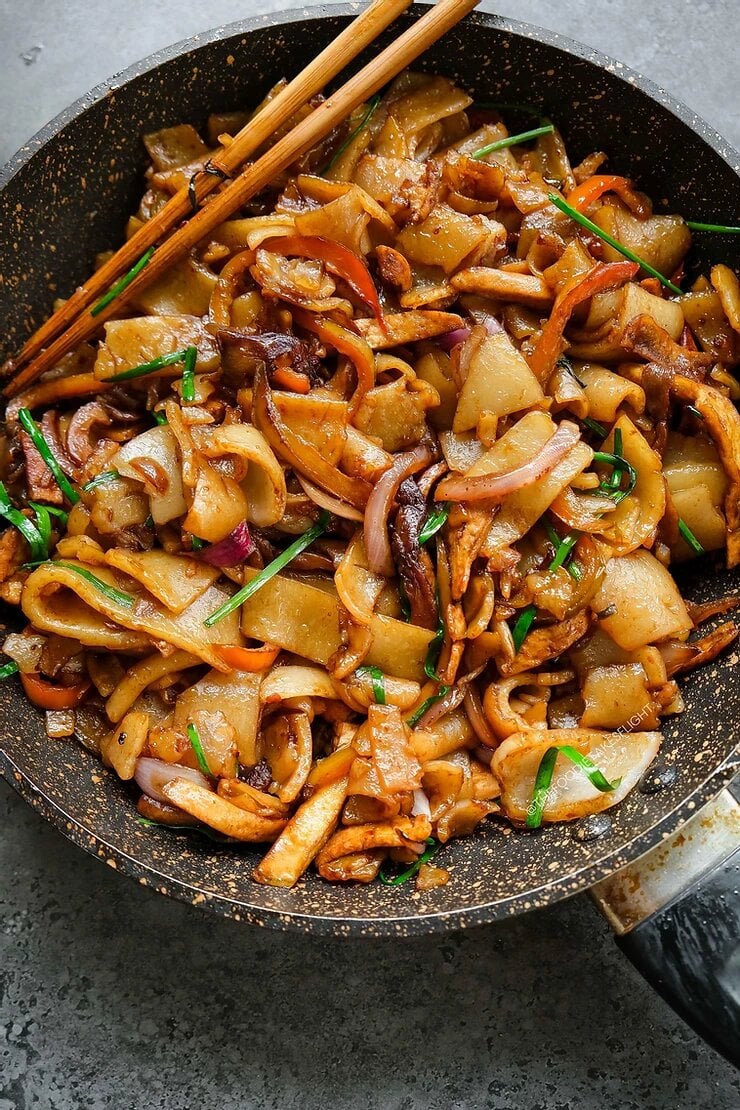
I made half of the rice noodle recipe for this stir-fried hofan recipe and the other for the chili oil with fermented black bean noodles.
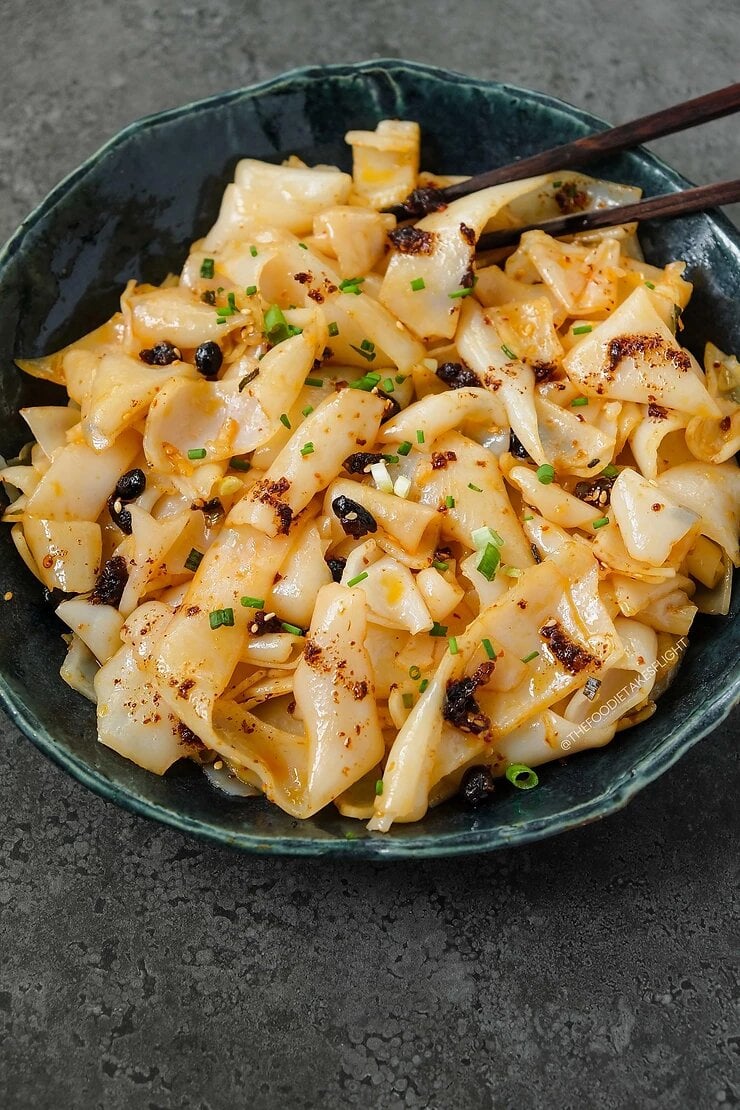
I'll share both noodle recipes below if you'd like to give them a try!
OTHER NOODLE RECIPES YOU'LL LOVE

Stir-Fried Ho Fun Noodles (Flat Rice Noodles Recipe)

Ingredients
- 1.1 lb fresh homemade rice noodles or sub dry wide rice noodles see notes*
- Neutral oil for cooking
Tofu, Mushrooms, and Veggies (totally up to you, feel free to use what you have)
- 1/2 lb extra firm tofu drained and sliced into strips
- 5 oz fresh mushrooms of choice I used oyster mushrooms, sliced
- 1/2 small bell pepper sliced
- Handful scallions garlic chives sliced
- 1 small onion thinly sliced
Other suggested vegetables
- Carrots
- Sliced cabbage
- Mung bean sprouts
Seasoning
- 2 tbsp soy sauce or more to taste
- 1 tbsp vegetarian stir-fry sauce or veg ‘oyster’ sauce
- 1 tsp chili garlic sauce , add more or less for spice - see homemade chili oil recipe here
- 1 1/2 tsp dark mushroom soy sauce , optional for color
- Dash ground white pepper optional
Instructions
- Heat a large pan or wok over high heat. Add a generous amount of oil to coat the pan/wok.
- Once hot, pan fry the tofu strips until lightly golden brown, around 3-4 minutes. Move the tofu to the side of the pan.
- Add in more oil and sauté the bell peppers and mushrooms (or other veggies/mushrooms you’re using) until cooked through and slightly browned/charred around the edges.
- Move them to the side of the pan as well. Add in the onion and sauté until translucent. Mix everything together and season with some soy sauce, to taste.
- Add in the rice noodles and season with soy sauce, stir-fry/vegetarian oyster sauce, and dark soy sauce (if using).
- Carefully mix everything together and leave to cook for a few more minutes. Add in the chives and bean sprouts (if using). Mix. Adjust according to desired taste. Turn off the heat.
- Serve and enjoy while hot!
WATCH Video
Notes
Noodles
- For dried rice noodles: I recommend using 200g dry wide rice noodles, that are at least 10mm thick.
- To prepare dry rice noodles, simply soak them in boiling hot water until pliable. This usually takes more or less than 10-12 minutes. They will turn into a solid white colour and will be pliable but still very chewy.
- Drain them from the water before stir-frying. I don’t recommend boiling the noodles because they’ll still cook during stir-frying. This way, you can still have chewy noodles even after stir-frying.
NUTRITIONAL INFO
Pin these images:


More Recipes You'll Love
Hi, how can we make this extra saucy?
Hi Hansa! If you’d like some saucy noodles, I can recommend my saucy noodles recipe here: https://thefoodietakesflight.com/easy-saucy-ramen-noodles-vegan-recipe/ You can replace the noodles in this recipe with some rice noodles if you’d like. 🙂
Thank you so much for the recipe. Enjoyed your video, definitely became a fan! Following your IG, mine is FoodbyJK!
Hi Jeeca i appreciate your blogs. where can i find dried wide and thick ho fan rice noodles,
Hi Shami, you can check your local Asian store or online. I usually purchase Thai brands for rice noodles. Hope this helps!
This recipe looks delicious and I was looking for a wide rice noodle recipe today. I was enjoying your video, but halfway through the video stopped, though I still heard your voice. Just thought you should know. I will try your recipe using a variety of veggies and shitake mushrooms – but no tofu.
Thanks so much!!!
Thanks Jan, appreciate it ◡̈
What can I substitute for tofo?
You can replace tofu with other protein ◡̈