

The result of all the kdramas I’ve been watching: constant noodle cravings. All those cravings and seeing endless bowls of this iconic Korean-Chinese fusion noodle dish has resulted into this Vegan Jjajangmyeon. ?
Jjajangmyeon is a really popular Korean-Chinese fusion noodle dish with a really thick black bean sauce loaded with diced potatoes, zucchini, onions, and mushrooms instead of the usual pork.

I had mine with some sliced cucumber on top for an extra layer of crunch and freshness to counter the richness of the sauce. A side of pickled yellow radish is amazing too!
“Jjajang” in Korean literally translates to fried sauce while “Myeon” translates to noodles. So put the sauce and noodles together, you have Jjajangmyeon! There’s also a version called Jjajangbap, that’s basically the Jjajang or sauce with rice (“bap”) but I personally prefer the noodle version!

If you’ve watched k-dramas you’ve probably seen a few scenes with these noodles involves since they’re often ordered for takeout and are really affordable, too.
This is a scene from the Korean drama 'Crash Landing on You' and Kim Joo Meok is pretty much me, haha.

THE BLACK BEAN PASTE: CHUNJANG
The black bean paste or chunjang alone is really umami and is where these noodles get its rich savoury flavour from. There is really nothing like it!
It's really rich so when cooked down with a little broth and the rest of the ingredients, it creates a nice flavour and texture that’s perfectly complimented with a little sweetness from the sugar.
You can also check for Jjajang sauce or Korean black bean sauce/pasted for jjajangmyeon in local Asian supermarkets or online.

You can find black bean sauces in small packets like the one below or in tubs or jars.

OTHER INGREDIENTS: VEGGIES, MUSHROOMS, AND THE BROTH

The traditional Jjajangmyeon is made with pork belly but in this vegan version I use shiitake mushrooms and soaked some dried ones in water, and also used the broth to cook the veggies down later.

For the broth, you can use one of the two options:

If using dried mushrooms:
- 5 dried shiitake mushrooms (for mushroom broth)
- 2 cups boiling hot water (for mushroom broth) OR

If using fresh mushrooms:
- 6 fresh shiitake mushrooms
- 2 cups vegetable broth
Dice up all the veggies into small cubes/pieces
I also like to soak my potatoes in water so they don't turn brown when exposed to air!

WHATN NOODLES TO USE FOR JJAJANGMYEON?
For the noodles, I used dry wheat noodles but you can also use dry jjajang noodles or dry udon noodles. If you have access to fresh jjajang noodles you can get at your local Asian or Korean store, that would be the best!

You can also cook just a few servings of noodles. Here I cooked 3 servings since the sauce is a big batch and I intend to store leftovers for upcoming days. So I'll cook then noodles on the day I intend to have the leftover sauce and scoop it over the freshly cooked noodles!
Cornstarch slurry: to thicken the sauce
Just simply mix the corn starch and water together then set it aside for later.

PREPARING THE SAUCE AND VEGGIES
Sauté the onion, garlic, and ginger in some oil.

Add in the black bean paste and stir-fry it in the oil as well.

Cook down the veggies, potatoes, and mushrooms with the sauce. Season the sauce with some soy sauce or veg mushroom oyster sauce and sugar, to taste.

Add in the water and leave the veggies to cook down.

You can cover your pan to better cook the potatoes.

Add in the cornstarch slurry and mix it in the sauce to thicken!

Scoop up that rich and thick jjajang sauce and top it with your noodles to make jjajangmyeon!
I enjoyed these noodles with my family with a side of yellow pickled radish and topped the noodles with some julienned cucumber for extra crunch and freshness, that really compliments the thick, rich sauce.

Mix it all up and enjoy!

This is a messy bowl but trust me, it's sooo good! See below for some tips on leftovers ◡̈

LEFTOVER JJAJANG SAUCE
As this sauce makes 6 servings, you can store some of the leftover sauce in the refrigerator for up to 5 days.

To enjoy the leftover sauce and make a fresh batch of Jjajangmyeon:
- Cook a fresh batch of noodles.
- While the noodles are cooking, you can scoop up some of the sauce (just enough for your noodles) then reheat it in the microwave or in a pan.
- Drain the noodles from the water and then top the reheated over the noodles afterwards.
- Mix well and enjoy!
This is another bowl I had a few days after with the leftover sauce I stored. I shared below how I store and prepare the leftovers!

Anyway, I hope you enjoy your noodles! You'll find the full recipe below. ◡̈
You can also check out my other noodle recipes:
- Thai Drunken Noodles (Pad Kee Mao)
- Easy Spicy Miso Noodles
- Spicy Miso Noodles
- Ginger and Scallion Noodles
- Chili Garlic Oil Noodles
- Mie Goreng (Indonesian Fried Noodles)
- Chili Garlic and Black Bean Eggplant Noodles
- Easy Sweet, Spicy, and Saucy Noodles
- Stir-Fried Tofu and Basil Noodles
- Tantanmen (Vegan Ramen)
- Yaki Udon
- Chinese-Style Bolognese
Are you looking for more delicious, vegan recipes?
You can get a copy of my cookbook, Vegan Asian!
If you crave vegan-friendly versions of classic Asian dishes, this cookbook is packed with Southeast and East Asian dishes inspired by those I grew up enjoying at home and those I’ve tried from my travels. From iconic Thai dishes to piping-hot Japanese fare and everything in between, the recipes in this will take your palate on a delicious food trip across Asia, and hopefully keep you coming back for more!
If you make this recipe, please tag me on my Facebook or Instagram and use the hashtag #thefoodietakesflight :)

Vegan Jjajangmyeon (Noodles in Black Bean Sauce)
Ingredients
Mushrooms and Broth (if using dried mushrooms)
- 5 dried shiitake mushrooms for mushroom broth
- 2 cups boiling hot water for mushroom broth OR
Mushrooms and Broth (if using fresh mushrooms)
- 6 fresh shiitake mushrooms (add to the 80g mushrooms below), see notes
- 2 cups vegetable broth
Noodles
- 6 servings dry wheat noodles , dried jjajang noodles, or dried udon noodles (each dry serving is around 65g) see notes
Cornstarch Slurry
- 2 tbsp corn starch
- 1/4 cup room temperature water
Bean Sauce
- 3 tbsp neutral oil
- 5 cloves garlic minced
- 1 large onion diced
- 1 tsp minced ginger
- 4 green onions thinly sliced makes around 1/2 cup sliced
- 1/2 cup black bean paste or chunjang around 190g
- 200 g zucchini diced (from 1 large)
- 250 g potato peeled and diced (from 2 small)
- 80 g fresh shiitake mushrooms diced (around 7 pieces), see notes
- 250 g cabbage chopped into small squares (from 1/2 small head)
- 3 tbsp cane sugar
- 2 1/2 tbsp vegetarian mushroom oyster sauce or soy sauce, to taste
- Ground pepper to taste
- More vegetable broth or water, if needed
- 1 tbsp toasted sesame oil optional
To Finish
- Julienned cucumber
- Yellow pickled daikon radish danmuji
Instructions
Mushrooms and Broth
- Dried Mushrooms: Soak the dried mushrooms in boiling hot water for 15 to 20 minutes or until completely rehydrated. This will be best done in advanced (or even soaked overnight).

- Dried Mushrooms: When the mushrooms are rehydrated, squeeze out the excess liquid and then finely dice the mushrooms as well so these can be mixed in the sauce later on. Do not discard the broth since we’ll be using this for the sauce later on.

- Fresh mushrooms: If using fresh mushrooms, simply slice the mushrooms into small squares then prepare the vegetable broth.


Noodles
- Cook the noodles according to package instructions until chewy. Drain from the water and then run through running water to stop them from cooking and to remove excess starch. Set aside.


Slurry
- Mix together the corn starch and water in as mall bowl until the corn starch has dissolved. Divide into bowls and then set aside.


Bean Sauce
- Prepare all the vegetables by slicing them into small cubes/pieces. For the potatoes, I made sure to soak them in water after dicing so they don’t turn brown as they do when exposed to air.

- Heat a large pan or wok over high heat. Add in the oil.
- Once hot, add in the onion, garlic, ginger, and green onions. Sauté for 2 to 3 minutes until tender and aromatic.

- Add in the chunjang or bean paste and fry in the oil for 2 to 3 minutes.

- Add in the zucchini, potatoes, and mushrooms (both the fresh and reydrated ones!). Sauté for 2 to 3 minutes before adding in the cabbage. Mix the vegetables well with the paste and then pour in the broth.

- Lower the heat to medium high then everything together and make sure the bean paste has dissolved in the water.

- Cover the pot and leave the veggies to cook for 5 to 6 minutes or until the potatoes are tender.

- Lower the heat to medium. Mix everything together and then season with the sugar, soy sauce, and pepper. When the sugar has dissolved, give the corn starch slurry a good mix again (since the corn starch tends to sit at the bottom).

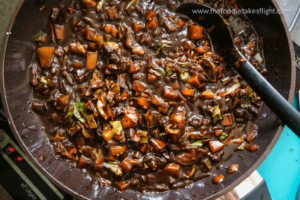
- While mixing the sauce, pour the slurry in a clockwise motion and then keep stirring until the sauce thickens.
- Taste the sauce and feel free to season more, to taste, if needed. If you’d like the sauce a little less thick, feel free to add a little water or broth (around 2 to 3 tbsp) then mix well.
- Turn off the heat. Mix in some toasted sesame oil into the sauce, if you’d like.


To Serve
- Scoop generous amounts of the sauce over each bowl of noodles and then top with some julienned cucumber (if using) and a side of pickled radish (if using).

- Mix the sauce and noodles together. Slurp away!


To Store the Sauce
- Since this makes a big batch of sauce, you can save some in a container and refrigerate for up to 5 days. See notes below for some tips.

WATCH Video
Notes
LEFTOVER SAUCE
If you have some leftover sauce, you can do the following to enjoy a fresh bowl of jjajangmyeon!- Cook a fresh batch of noodles.
- While the noodles are cooking, you can scoop up some of the sauce (just enough for your noodles) then reheat it in the microwave or in a pan.
- Drain the noodles from the water and then top the reheated over the noodles afterwards.
- Mix well and enjoy!
NUTRITIONAL INFO
You can Pin these Images:


More Recipes You'll Love

Thank you so much for this great recipe! I too developed a craving for jjajangmyeon while watching lots of K-dramas, including Crash Landing on You (one of my absolute favs)! It’s so hard to find it without pork, which I don’t eat. I tried a different vegan recipe that was only so-so, but yours came out great! I’ll definitely be making this again. Thanks again!
Thank you so much for this great recipe! I too really wanted to try jjajangmyeon while watching lots of K-dramas, including Crash Landing on You (one of my absolute favs) and Strongest Deliveryman (in which they ate endless amounts of jjajangmyeon)! It’s so hard to find it without pork, which I don’t eat. I tried a different vegan recipe that was only so-so, but yours came out great! I’ll definitely be making this again. Thanks again!
Hi Shira, thank you so much!! Happy you enjoyed it 🙂
I really wanted to make this, but struggled to find the black bean paste. I saw another blog that said Lee Kum Kee Black Bean Garlic Sauce can be used instead of black bean paste but it will be slightly different taste. I took the risk as I really wanted to try it, and it was so so good! I love that it keeps for a few days and the amount it makes does my husband and I for 3 nights of dinner! I’m still on the search for the correct black bean paste as I want to make this the correct way, but subbing the Lee Kum Kee sauce tasted good, so I know it will be even better when I finally find the correct paste. X
Hi! Would it be okay to substitute the potato with pan fried tofu so it has more protein or does the potato have significance to the dish? Can’t wait to try this out!
Hi Dani, you can add the tofu along with the potatoes and mushrooms or leave out the potatoes if you’d like. It adds a nice texture and bite to the sauce but you can do without it. Your tofu can also replace the pork that’s usually used as protein in the traditionally made non-vegan dish. Hope this helps!
Tried this tonight. Family loved it! Rich and slightly sweet and black bean wonderousness without the salty bitterness. I used half a packet of one of the pastes I found on Amazon. Terrific recipe, so thanks so much!
Thanks as well, Ellen! Hope you had a great weekend ◡̈
Can I use dried mushrooms rehydrated in the sauce instead of fresh ones? If so, how many?
Hey Darren, yes you can! You can use 4-6 pieces, depending on the side. If they’re small ones, 6 would do. If large ones, 4 would do. You can also reserve the mushroom water for the sauce for extra flavor. Hope this helps!